
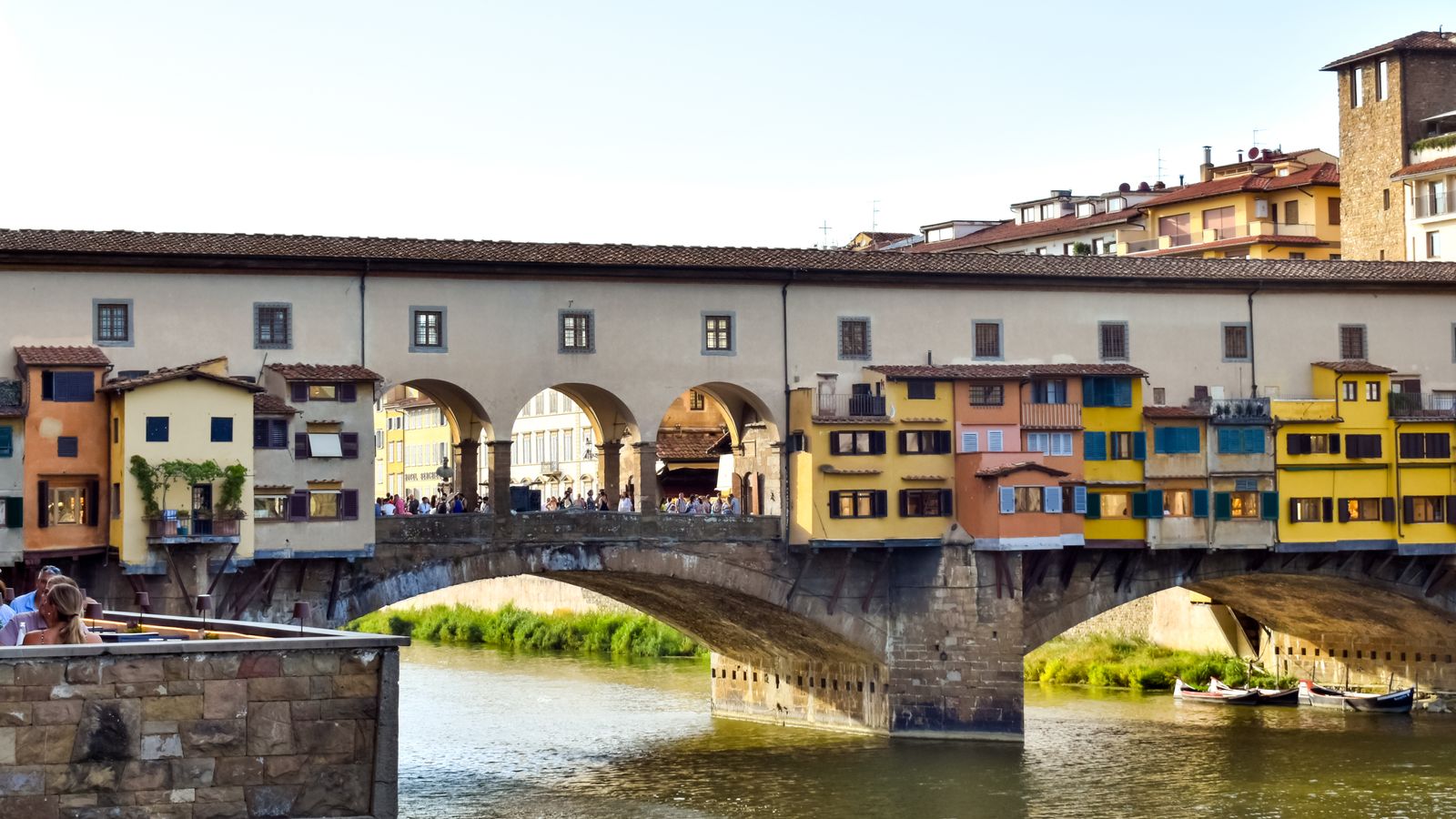
Ponte Vecchio
- bridge
- Price: €20 - €24
- Opening hours: Bridge open 24 hours; jewellers' shops typically 10:00 - 19:00
Book a guided tour of Firenze
Skip the line and see Firenze with a local guide.
History
A bridge has spanned the Arno at this point, the river's narrowest within the city walls, since Roman times. The structure crossed today, however, dates only to 1345, rebuilt in stone after a catastrophic flood destroyed its predecessor in 1333. Its three shallow segmental arches, with a central span of roughly 30 metres, were considered strikingly advanced engineering for the fourteenth century, letting the bridge sit lower and flatter over the water than earlier designs allowed.
For its first two and a half centuries the bridge served as a working marketplace, lined with the stalls of butchers, tanners and fishmongers who used the river below to dispose of their waste, leaving the crossing famously foul. In 1593, Grand Duke Ferdinando I de' Medici — who used the bridge regularly to move between the Palazzo Vecchio and the Palazzo Pitti — decreed that only goldsmiths and jewellers could trade there from then on. The rule has held for more than four hundred years: the shops lining the bridge today are still working jewellers, not souvenir stalls.
Did you know?
Above the shops runs the Vasari Corridor, an elevated private passageway that architect Giorgio Vasari built in just five months in 1565 so the Medici family could move between their two palaces without mixing with the crowds on the street below. Closed to the public for most of its history, the corridor has reopened in recent years for guided visits on a separate ticket from the Uffizi — tours are limited in number and book up well ahead, so treat a visit inside as a bonus to plan for rather than something to expect on the day.
One window in that corridor has its own well-known story: in 1938, on the occasion of Adolf Hitler's state visit to Florence, the original narrow openings at the centre of the bridge were knocked through into one large panoramic window so that he could better admire the view up the Arno. Whether that visit really explains what happened to the bridge six years later is still debated by historians, but the window itself remains, wider than its neighbours, if you know to look for it.
The Bridge That Survived
On the night of 3–4 August 1944, as Allied forces closed in on Florence, retreating German troops methodically destroyed every bridge across the Arno within the city — the Santa Trinita, the Carraia, the Grazie, the San Niccolò — to slow the advance. The Ponte Vecchio alone was left standing.
Rather than blow up the bridge itself, German engineers demolished the medieval buildings and streets at either end, burying the approaches under enough rubble to make the crossing impassable to vehicles and troops regardless. The gap this left is still visible today in the noticeably newer, plainer buildings around the Via de' Guicciardini side of the bridge, rebuilt in a simplified style after the war — a quiet reminder, next to a survivor, of a stretch of the city that wasn't so lucky.
Good to know
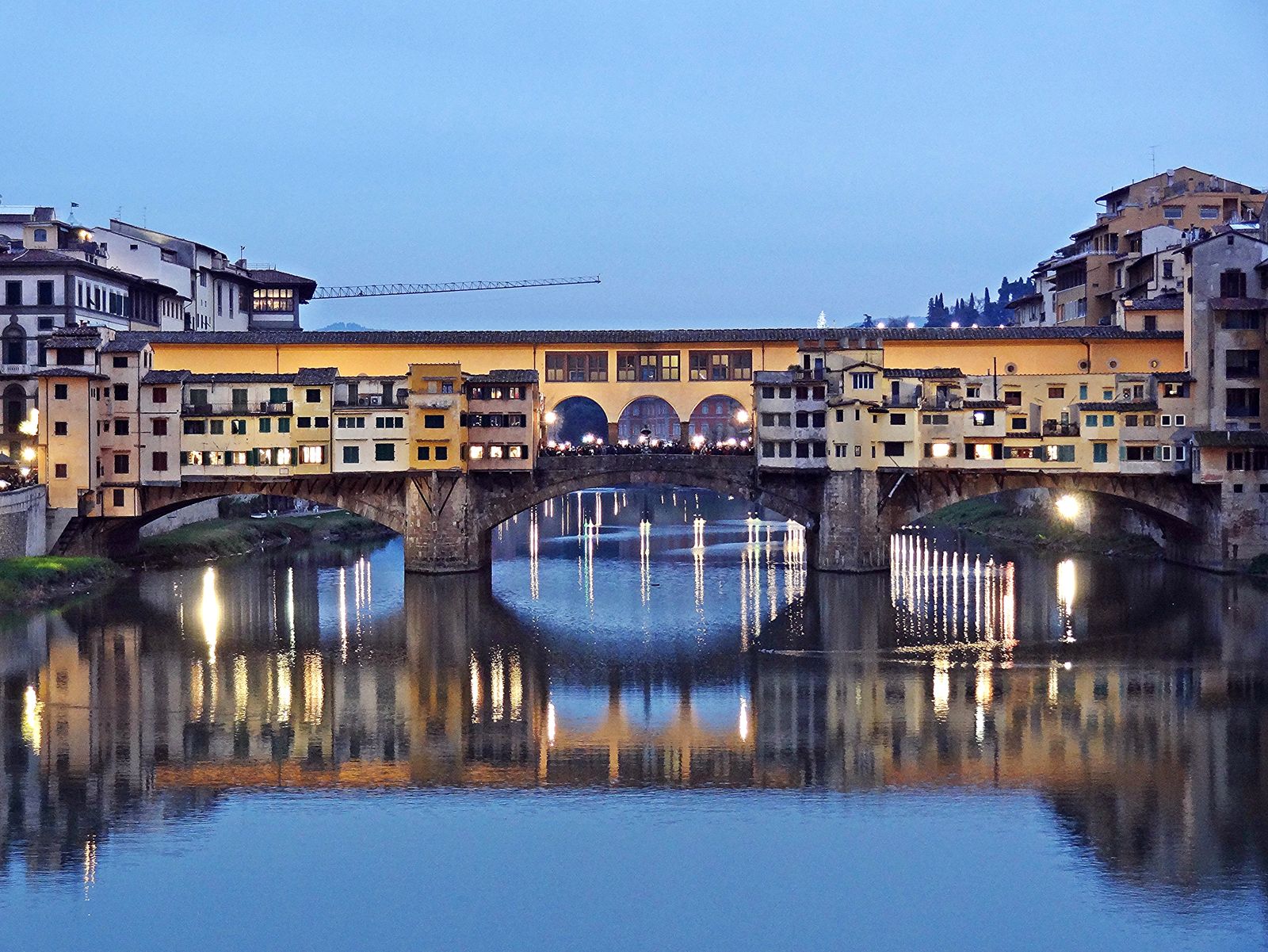
Crossing the Ponte Vecchio itself is free and possible at any hour — it's a public street, not a paid attraction. Where money does come in is the Vasari Corridor above it, bookable separately from the Uffizi Gallery on its own guided-tour ticket, and it's worth keeping the two clearly apart when planning: no ticket is needed simply to walk the bridge and browse the jewellers' windows.
The bridge is at its most crowded around midday, when tour groups and day-trippers pack the narrow central section shoulder to shoulder; come early in the morning or after dinner instead for a clearer view of the shopfronts and the Arno, and better light for photos either way. The shops themselves are working goldsmiths and jewellers, several run by families who have traded there for generations, so it's worth a browse even if you're not planning to buy.