
Discover Firenze
- About 363,000 residents
- Toscana (Tuscany)
- CET/CEST (UTC+1 / UTC+2)
History
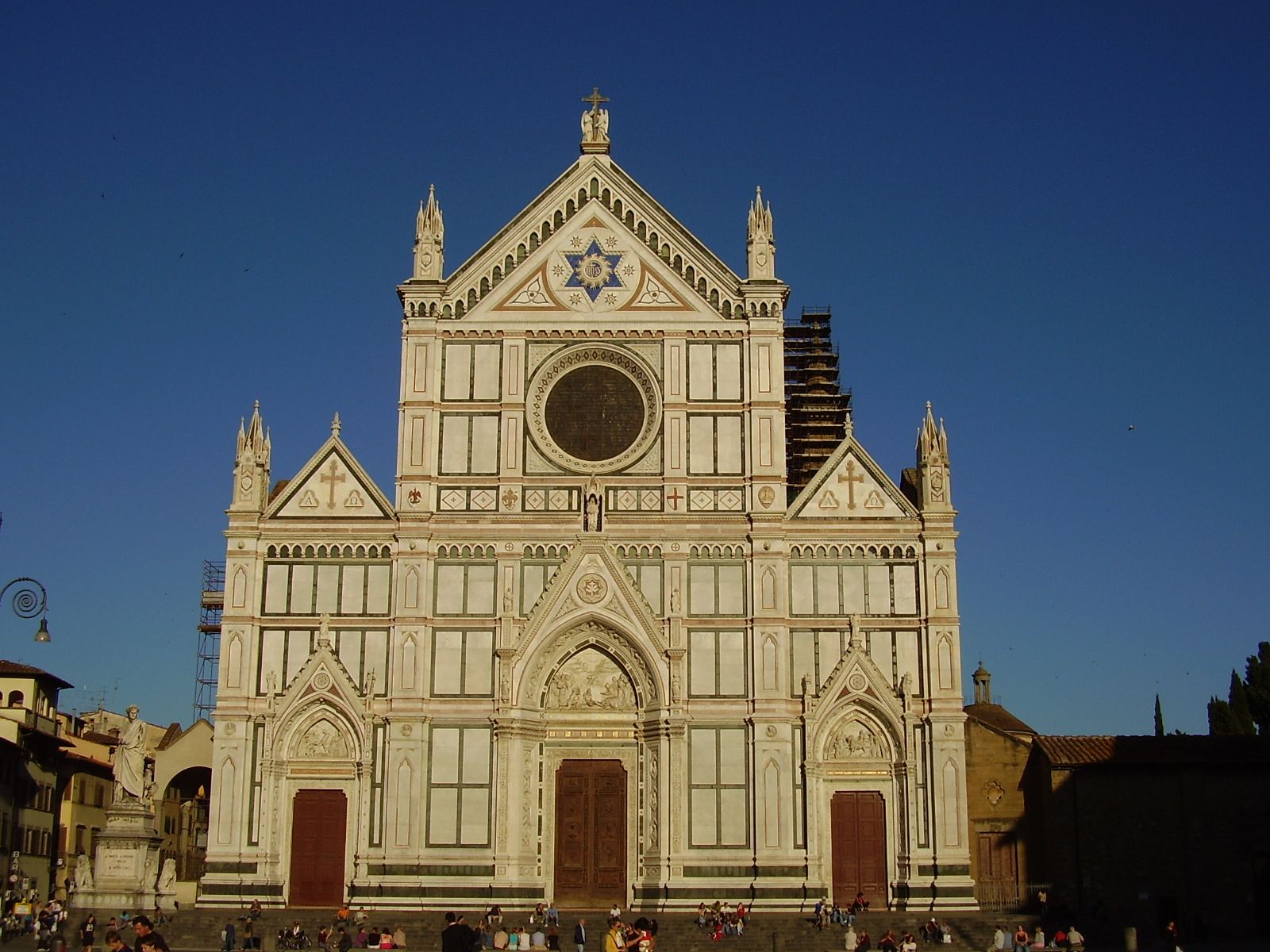
Florence began as Florentia, a Roman colony founded in 59 BC to settle veterans of Julius Caesar’s legions on the banks of the Arno. Its street grid still traces the original Roman axes, and Piazza della Repubblica sits precisely on the site of the old Roman forum. Through the early Middle Ages the city grew as a river-crossing and wool-trading town, laying the groundwork for the powerful guilds — the Arte della Lana and Arte di Calimala among them — that would come to run its affairs.
By the 14th and 15th centuries, Florence’s wool and banking fortunes, above all the rise of the Medici bank, funded an extraordinary concentration of art and architecture that the world would later call the Renaissance. Brunelleschi raised the dome of the Duomo without a wooden support frame in 1436, Ghiberti spent decades on the Baptistery’s bronze doors, and painters and sculptors from Botticelli to Michelangelo worked under Medici patronage, reshaping how Western art understood the human form and perspective.
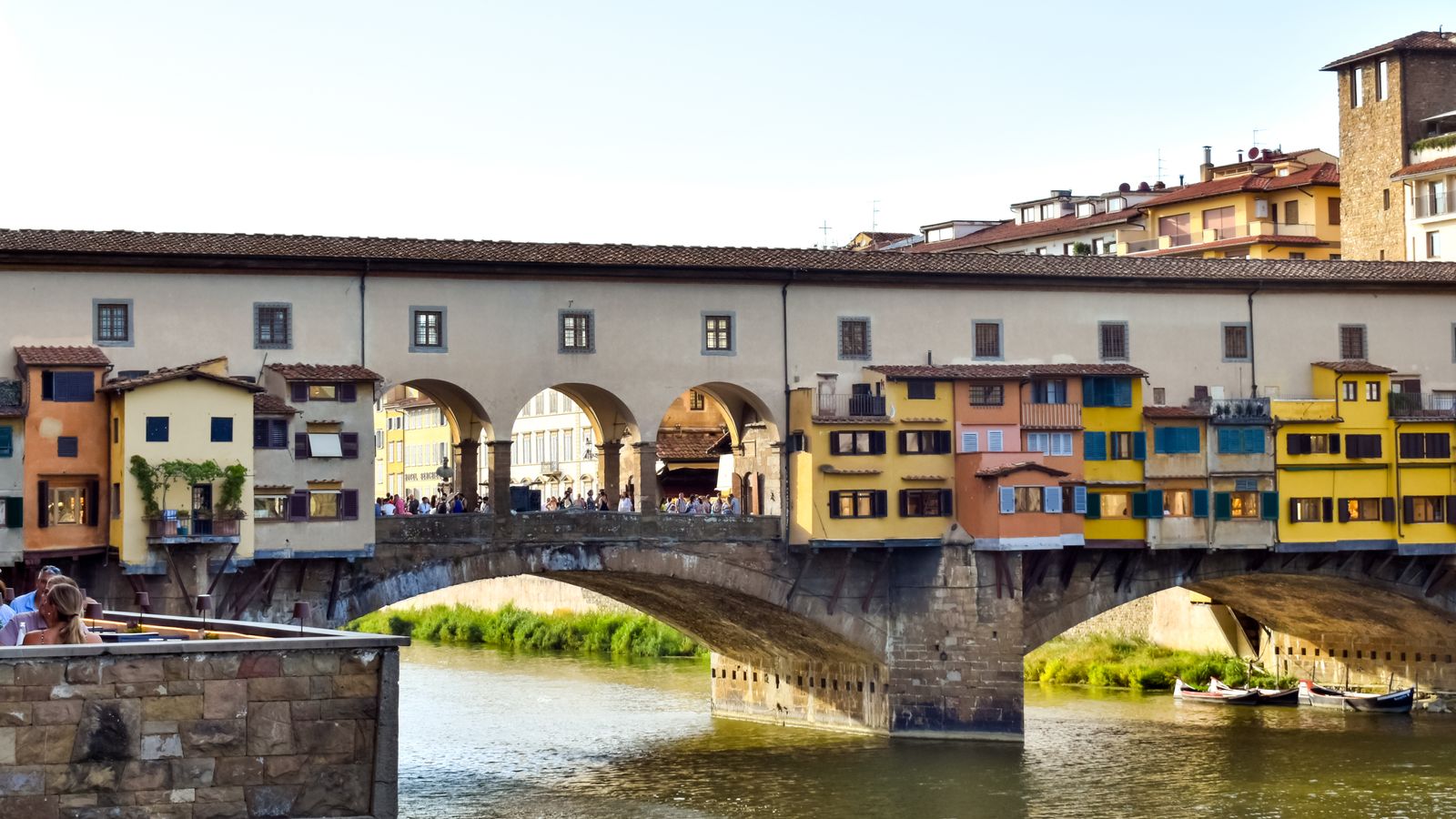
Cosimo I de’ Medici became Grand Duke of Tuscany in 1569, and his family’s rule left the cityscape still visible today: the Uffizi, built as government administrative offices before becoming one of the world’s great galleries, and the Vasari Corridor of 1565, an elevated private passageway linking the Medici seats of power straight over the shops of Ponte Vecchio. Florence briefly served as capital of the newly unified Kingdom of Italy between 1865 and 1871, before the seat of government moved on to Rome.
The 20th century brought both devastation and renewal: the catastrophic Arno flood of November 1966 damaged or destroyed countless artworks and manuscripts, prompting an international rescue effort remembered through the volunteer “mud angels” who came from around the world to save what they could. Florence’s historic centre was inscribed as a UNESCO World Heritage Site in 1982, and the city today works to balance the pressures of mass tourism against its role as custodian of one of the richest concentrations of art and architecture on Earth.
Did you know?
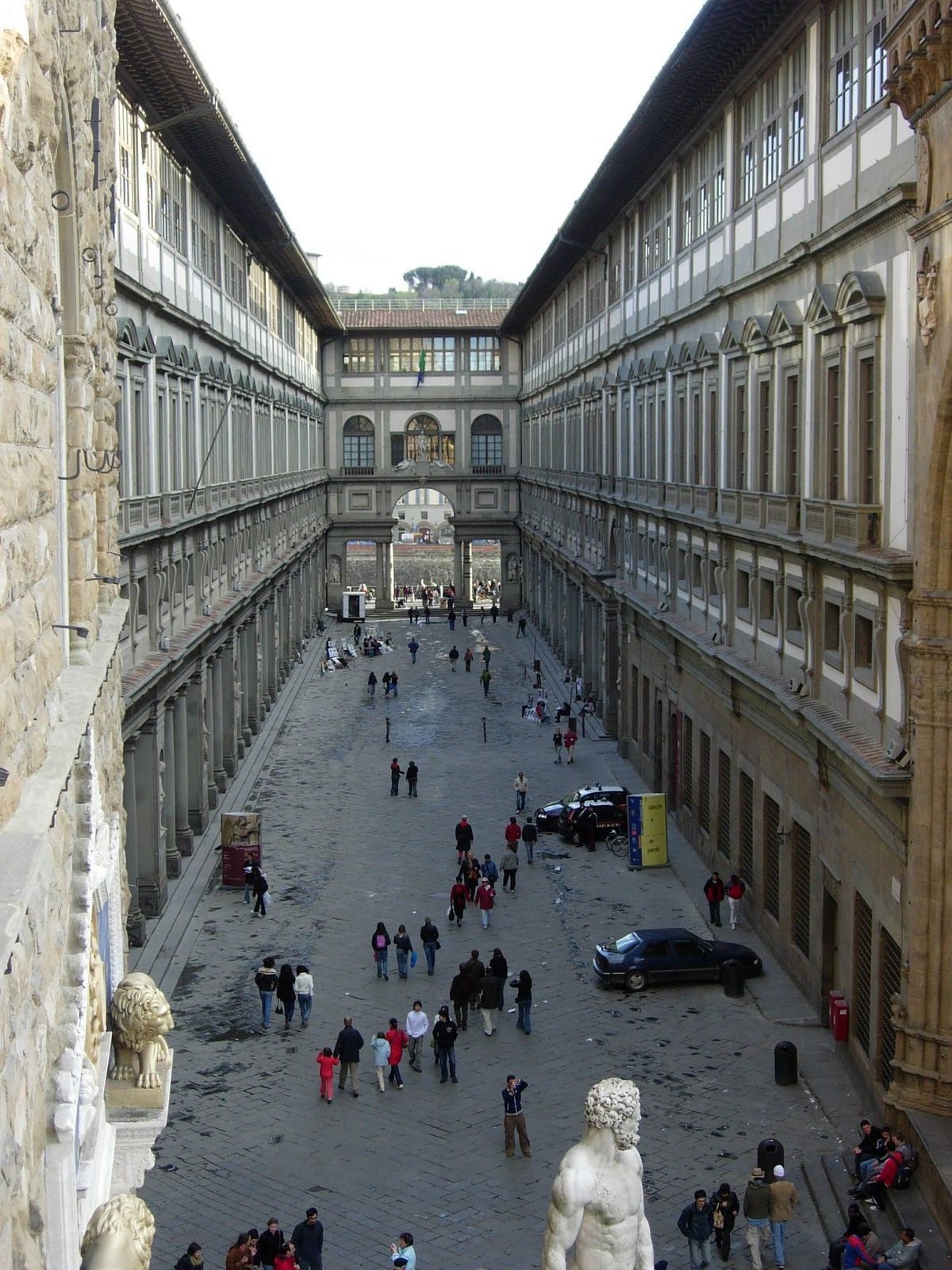
- Brunelleschi's dome atop the Duomo, completed in 1436, was built without any wooden support frame — a double-shell herringbone brick technique that remains the largest masonry dome ever constructed.
- The Vasari Corridor, a kilometre-long elevated passageway built in just five months in 1565, lets the Medici walk from Palazzo Vecchio to Palazzo Pitti straight over the shops of Ponte Vecchio. Those shops used to be butchers and tanners; in 1593 Grand Duke Ferdinando I banned them because of the smell rising into the corridor and replaced them with goldsmiths, who occupy it still.
- Ponte Vecchio was the only bridge in Florence left standing after German forces retreated in August 1944 — they destroyed every other crossing but reportedly spared this one, choosing instead to demolish the buildings at either end to make it impassable.
- Michelangelo's David spent nearly 370 years standing outdoors in Piazza della Signoria before being moved indoors to the Accademia Gallery in 1873 to protect it from the elements; a full-size marble copy has stood in its original outdoor spot ever since.
- The modern piano was invented in Florence: around 1700, Bartolomeo Cristofori, the Medici court's instrument keeper, built the first harpsichord capable of playing both loud and soft — its Italian name, pianoforte, describes exactly that.
- Piazza della Repubblica sits on the exact site of the Roman forum, the centre of the fortified colony of Florentia founded here in 59 BC — the city's street grid in this area still traces those two-thousand-year-old Roman axes.
Must-see
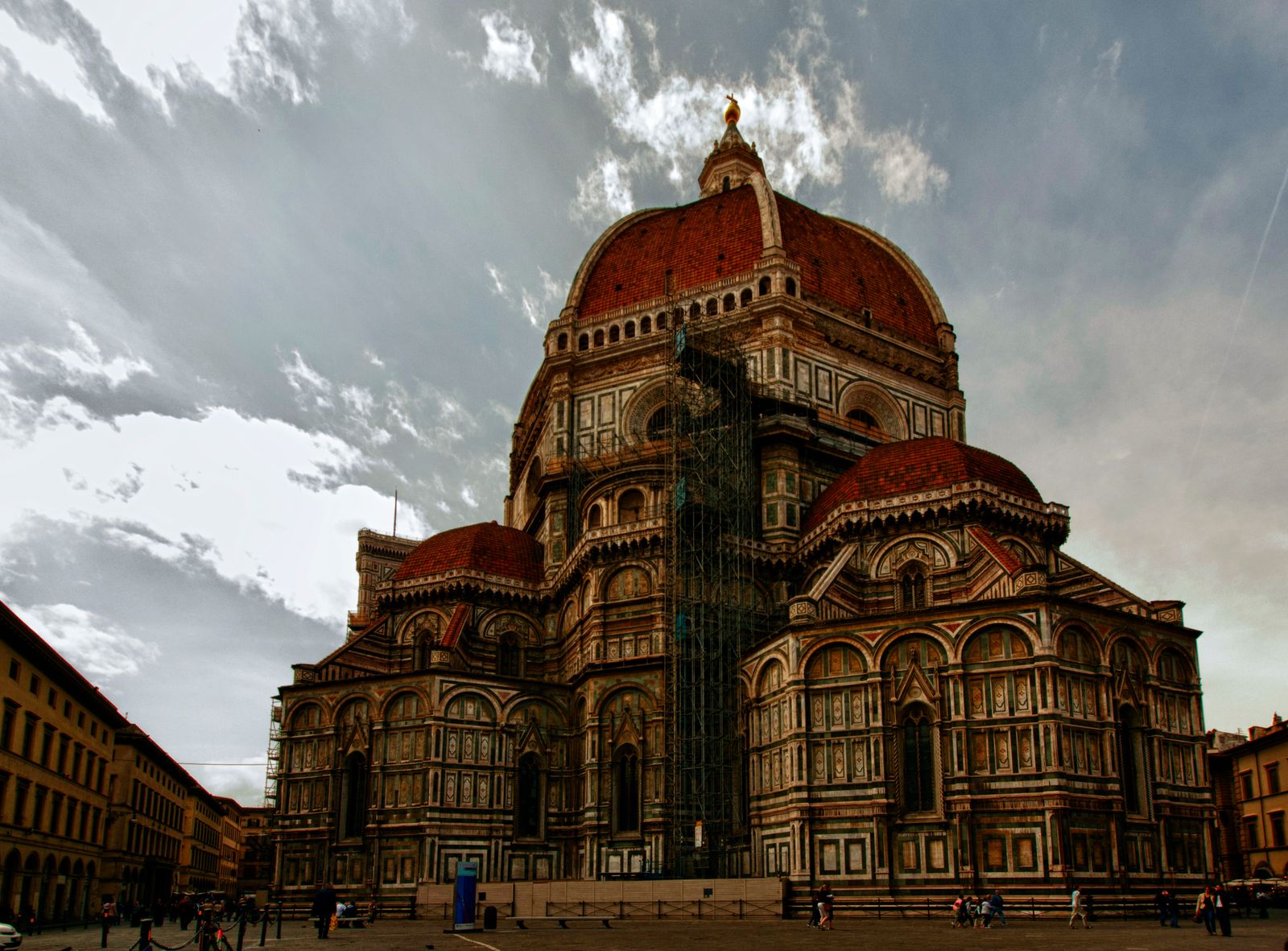
- Florence Cathedral — Brunelleschi's red-tiled dome crowns Florence's Gothic cathedral, begun in 1296 and still one of the largest masonry domes ever built, at the heart of the historic centre.
- Uffizi Gallery — One of the world's great art museums, built as Medici government offices by Giorgio Vasari from 1560 and home to Botticelli's Birth of Venus and masterpieces spanning centuries.
- Ponte Vecchio — Florence's medieval bridge over the Arno, rebuilt in 1345 and lined with jewellers' shops since 1593, and the only city bridge to survive the Second World War intact.
Local dishes
- Bistecca alla Fiorentina — A thick, bone-in T-bone cut from Chianina cattle, grilled very rare over hot coals and seasoned simply with salt, pepper and olive oil.
- Ribollita — A hearty peasant soup of Tuscan bread, cannellini beans and dark cavolo nero kale, traditionally reboiled the next day — hence the name.
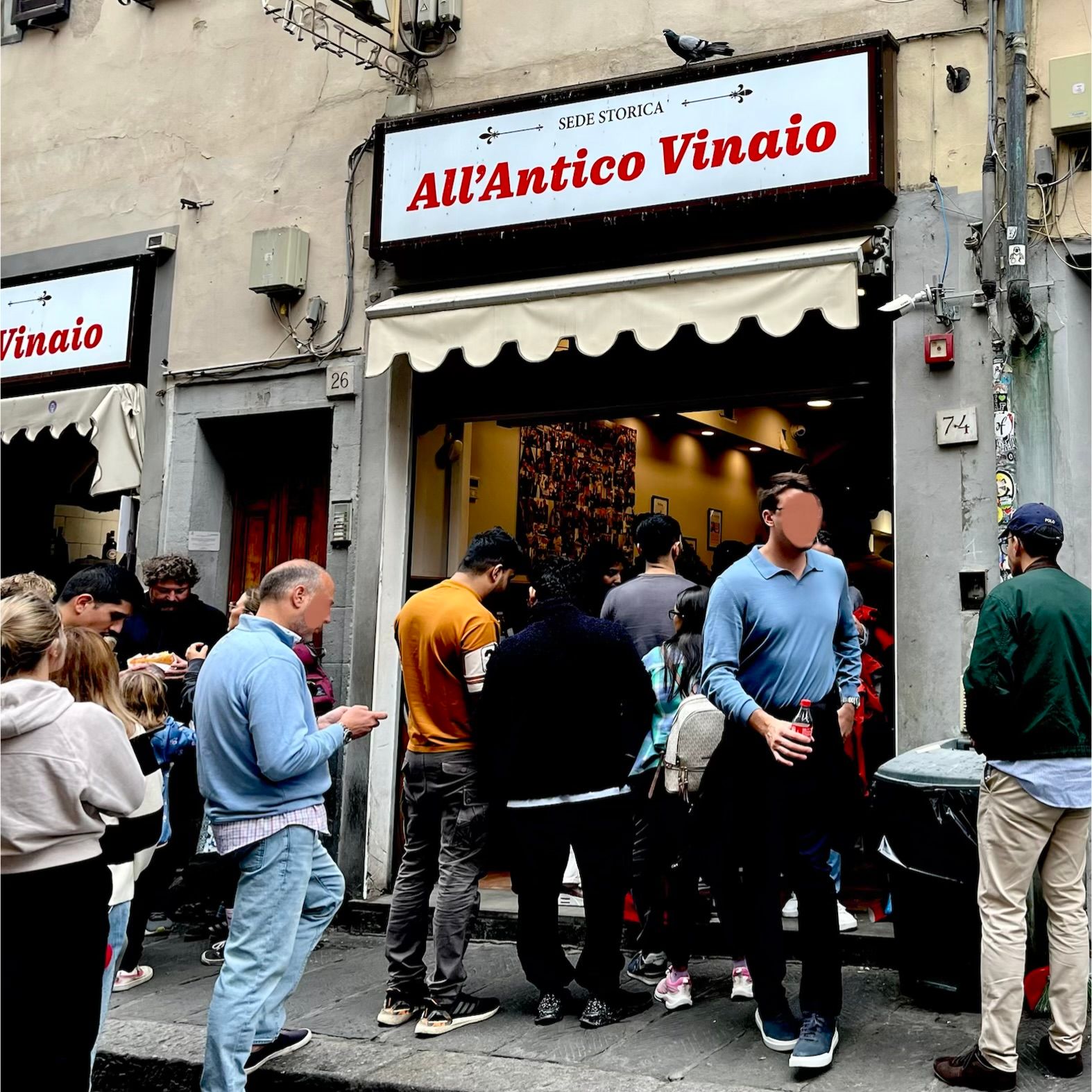
- Lampredotto — Florence's classic street food: the fourth stomach of the cow, slow-simmered and served in a bread roll, dipped in its own broth, from historic trippai carts around the city.
- Pappa al Pomodoro — A thick, comforting soup of stale bread, ripe tomatoes, garlic, basil and olive oil, born from the same frugal Tuscan kitchen as ribollita.
- Crostini di fegatini — Toasted bread topped with a rustic chicken-liver pâté, simmered with capers, anchovy and a splash of vin santo — a staple starter on any Florentine table.
Practical info
Getting around
Florence's historic centre is small and almost entirely walkable, with most major sights only ten to fifteen minutes apart on foot. Nearly the whole centre is a restricted traffic zone (ZTL), so driving in isn't an option for visitors — park outside the walls and get around on foot, by ATAF bus, or on tram lines T1/T2, which connect the outskirts and Santa Maria Novella station to the centre. A Firenze Card covers entry to over 70 museums, including skip-the-line access to the Uffizi and Accademia, for 72 hours.
When to go
Late spring (April–May) and early autumn (September–October) bring the most comfortable weather and noticeably smaller crowds than the summer peak. July and August are hot, humid and busy, with long queues at the Uffizi and Accademia unless you book timed-entry tickets in advance. December brings a quieter, cooler city with Christmas markets around Santa Croce and Santa Maria Novella.
Good to know
- Book Uffizi Gallery and Accademia (David) tickets online well in advance — walk-up queues in high season regularly run two hours or more.
- Most state museums, including the Uffizi, close on Monday — check opening days before planning your itinerary.
- A dress code applies inside the Duomo, Santa Croce and other churches: shoulders and knees must be covered.
- The historic centre is a restricted traffic zone (ZTL) around the clock — arriving by car, use one of the guarded car parks outside the walls rather than risking a fine.