
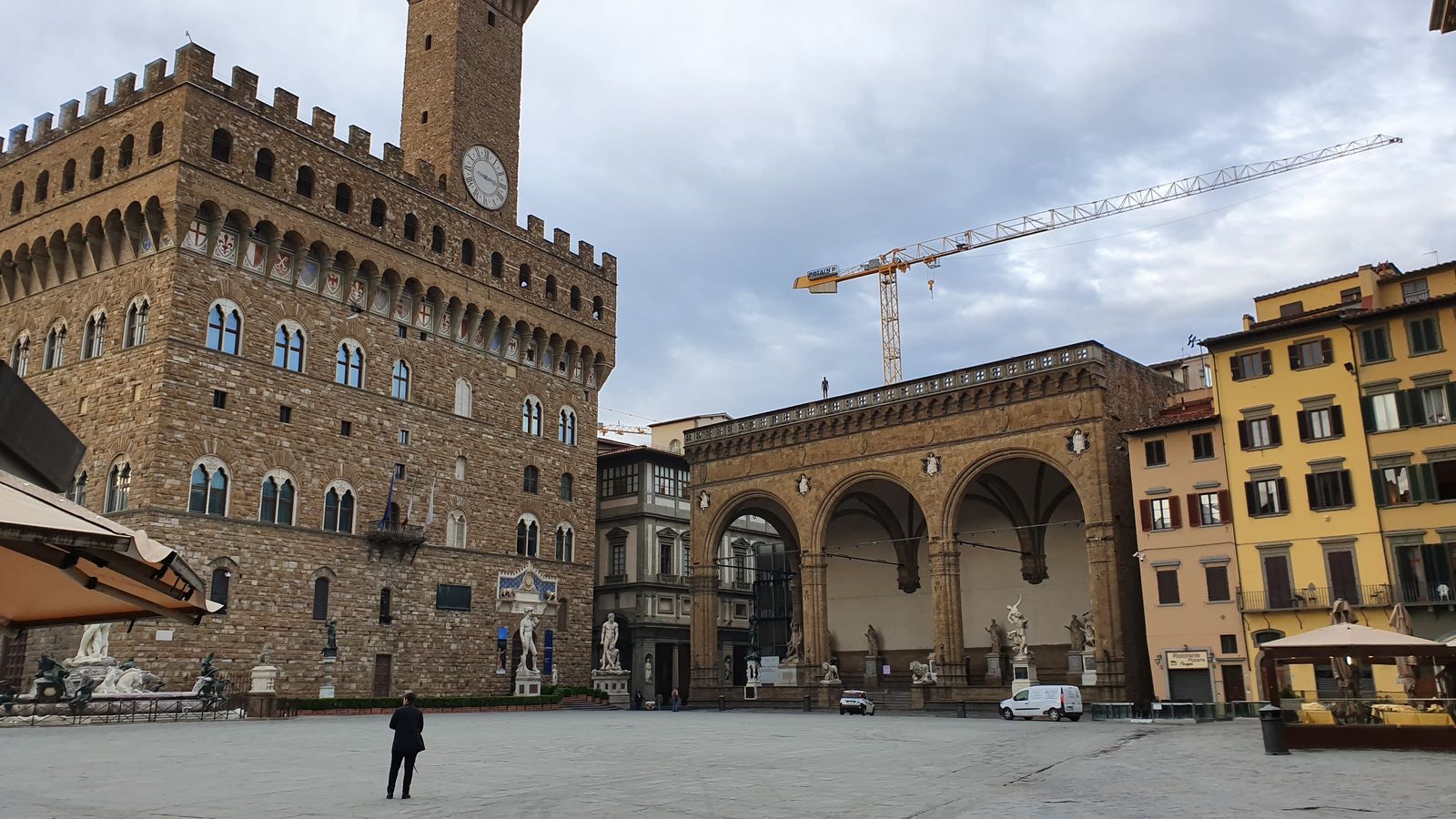
Piazza della Signoria
- piazza
- Opening hours: Always open
Book a guided tour of Firenze
Skip the line and see Firenze with a local guide.
History
From the late 13th century, this L-shaped square was laid out as the political heart of Florence, paved in front of the newly built Palazzo Vecchio, seat of the city's governing priors. For more than seven hundred years it has remained the stage for Florentine civic life, and the fortress-like palazzo still houses the mayor's office and city council chambers today.
The square has also witnessed some of the city's most turbulent history. In 1497, followers of the fiery preacher Girolamo Savonarola gathered here to burn cosmetics, mirrors, gaming tables, and paintings judged to be vanities in a mass bonfire. A year later the tide turned: Savonarola himself, tried for heresy after his break with Rome, was hanged and burned on almost the same spot, an event now marked by a small commemorative plaque set into the paving.
Did you know?
Piazza della Signoria has functioned as an open-air sculpture gallery since the Renaissance. Michelangelo's David stood here from 1504, a defiant symbol of the young Florentine Republic, until 1873, when concerns about weather damage led to its move indoors to the Accademia Gallery. The marble figure seen in the square today is a faithful replica installed in 1910 — a detail that catches out many visitors who assume they're looking at the original.
The David shares the square with an illustrious cast of other works: Giambologna's bronze equestrian statue of Grand Duke Cosimo I, Bartolomeo Ammannati's Neptune Fountain (nicknamed "Il Biancone", "the big white one", by unimpressed Florentines when it was unveiled), and Benvenuto Cellini's bronze Perseus holding the severed head of Medusa, sheltered under the arches of the neighbouring Loggia dei Lanzi.
Good to know
The square costs nothing to enter and is open around the clock, making it a natural place to pause between sights, with several cafés offering outdoor seating right on the paving — expect to pay a premium for the view.
Remember that the statue of David standing in the square is a copy: to see Michelangelo's original, head to the Galleria dell'Accademia across town. The Loggia dei Lanzi, with its own collection of statues, is free to walk through at any time, while a visit inside Palazzo Vecchio itself requires a separate ticket.