
Orsanmichele
- sacred
- Price: Free
- Opening hours: 08:30 - 18:30, Wed-Mon (closed Tue; Sun until 12:00); upstairs museum open Mon & Sat mornings only, from about €8
History
The site takes its name from an 8th-century oratory dedicated to San Michele that once stood here in an orto, a kitchen garden, on the edge of early medieval Florence. By the 13th century that had given way to a grain market, and in 1337 the city replaced its open loggia with the striking building seen today, designed to combine a working public granary on its upper floors with an open trading arcade at street level — part civic infrastructure, part architectural statement.
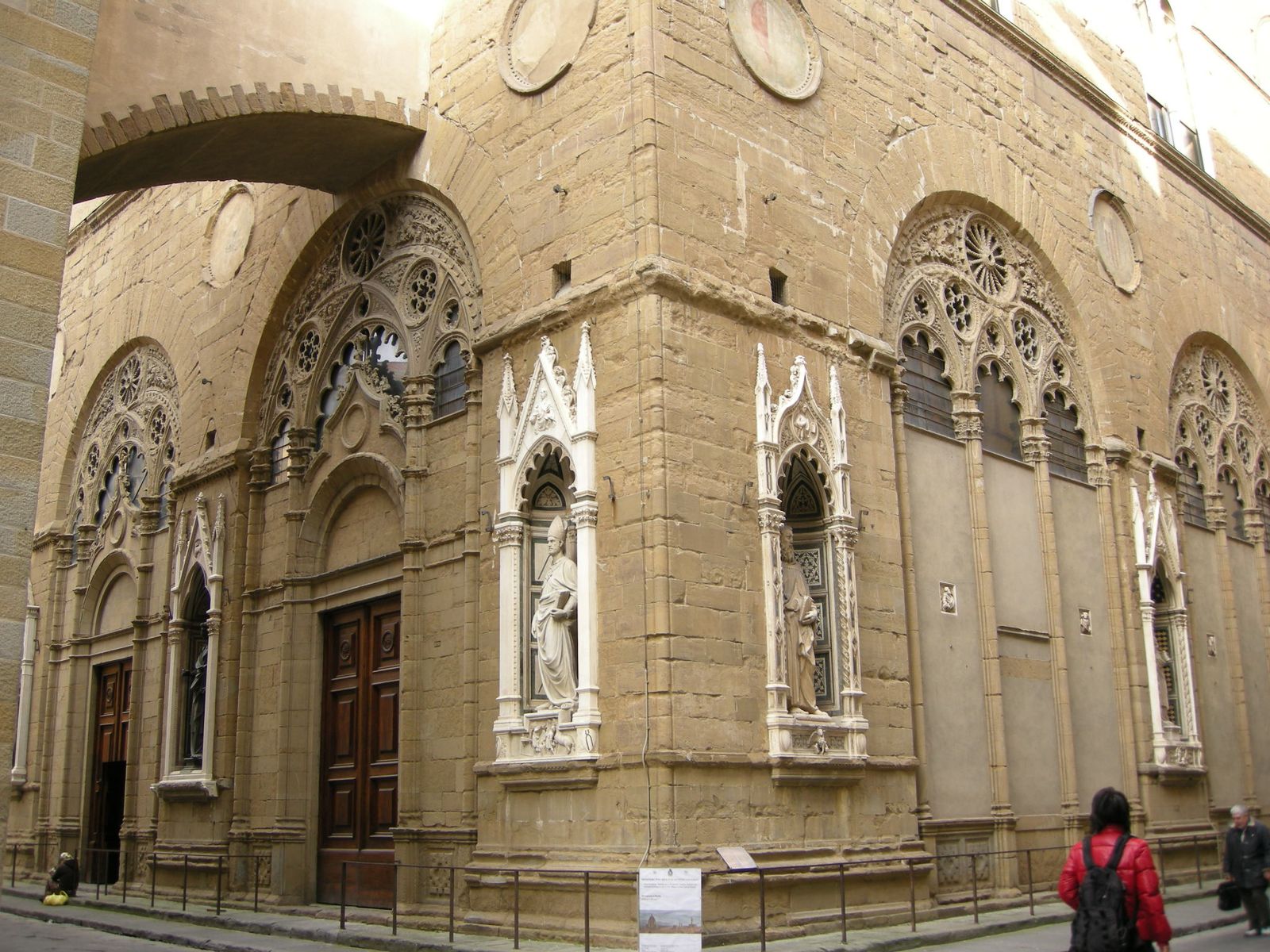
The building's purpose shifted again after a painted image of the Madonna kept at the site was credited with miracles, drawing growing crowds of the faithful to pray before it. In the later 14th century the ground-floor arcades were walled up with elegant Gothic tracery, turning the market into a church in its own right, still centred on Andrea Orcagna's soaring marble tabernacle of 1352–59, built specifically to house and honour the venerated image.
Did you know?
From 1339, Florence's powerful trade and craft guilds were each assigned one of the exterior niches and required to fill it with a statue of their patron saint, competing openly with rival guilds over whose commission would impress the city most. The results reads like a roll call of Renaissance sculpture: Lorenzo Ghiberti's Saint John the Baptist and Saint Matthew, Donatello's Saint Mark and Saint George, Nanni di Banco's Four Crowned Saints, and later additions by Andrea del Verrocchio and Giambologna.
Most of what you see in the niches today are careful copies; the original marbles and bronzes were gradually moved indoors for conservation and now form the core of the upstairs museum, reopened in 2024 after a lengthy renovation that raised the statues onto plinths roughly two metres high, recreating the elevated view worshippers below would originally have had of their patron saints.
Good to know
Entry to the ground-floor church is free, and its Gothic tracery windows, vaulted ceiling and Orcagna's tabernacle can be taken in on a relatively short visit — it pairs easily with a walk through the surrounding streets between the Duomo and Piazza della Signoria.
The upstairs museum, where the original guild statues are displayed, is easy to miss because it keeps very limited opening hours, generally only Monday and Saturday mornings — check the current schedule before you go and plan around it if seeing the originals up close matters to you, since turning up on any other day means the museum simply will not be open.