
Uffizi Gallery
- art-museum
- Price: €16 - €29
- Opening hours: Tue-Sun 08:15 - 18:30 (last entry 17:30); closed Mon
History
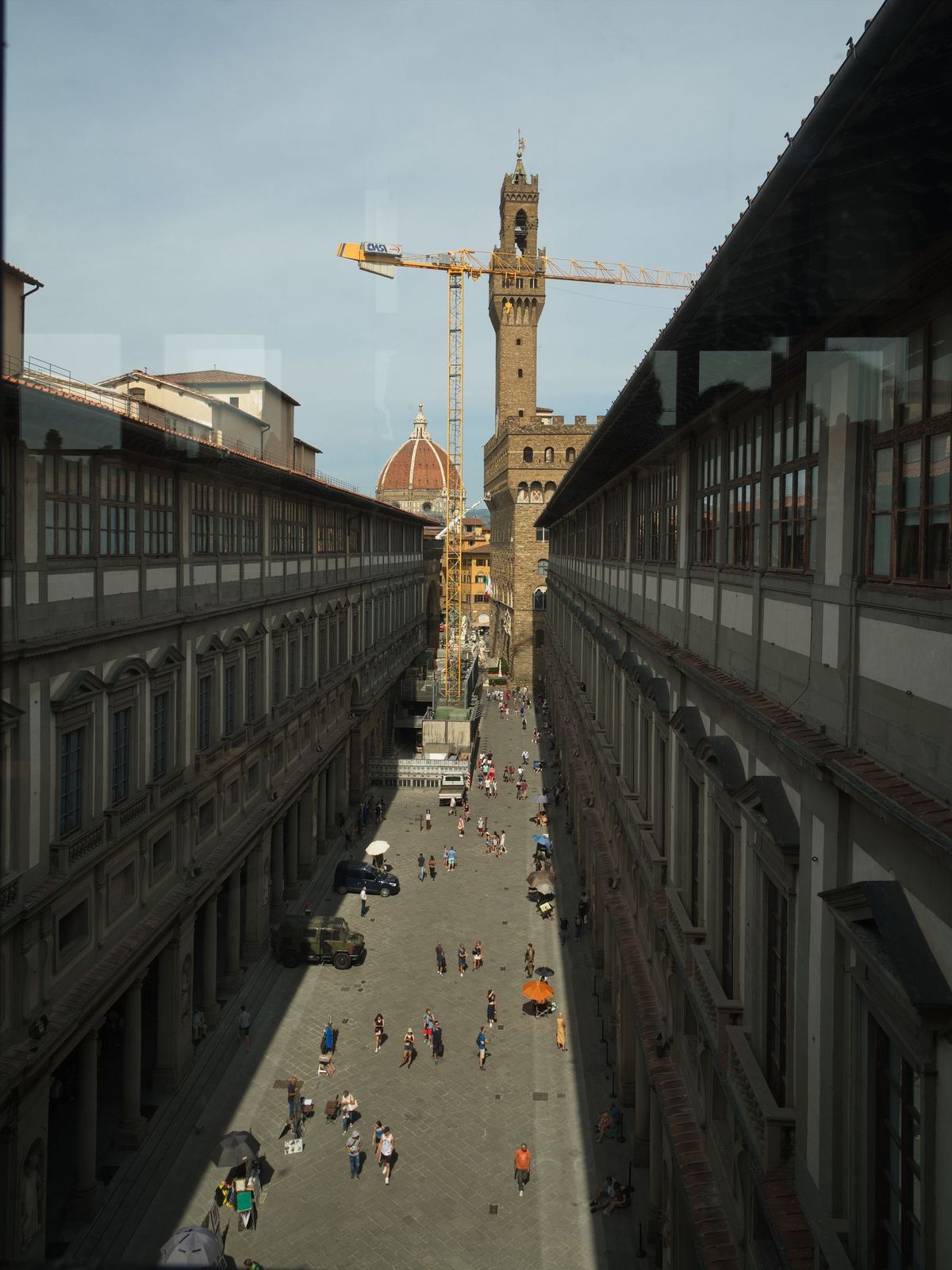
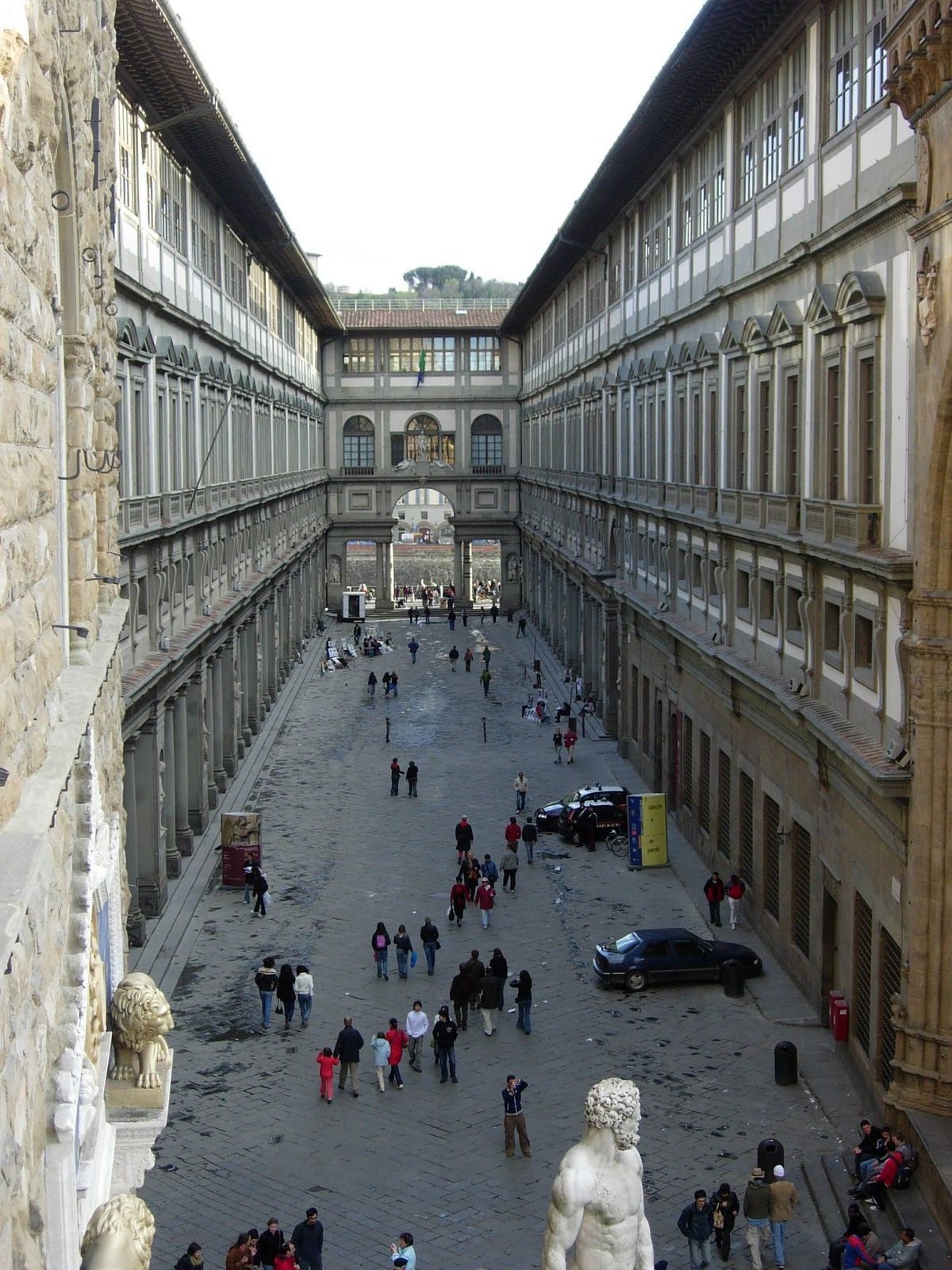
Cosimo I de' Medici commissioned Giorgio Vasari in 1560 to unite Florence's thirteen government offices — the uffizi, from which the gallery takes its name — inside a single new building beside Palazzo Vecchio, on the bank of the Arno. Vasari died in 1574 before the work was finished, and it fell to Alfonso Parigi the Elder and Bernardo Buontalenti to complete the U-shaped complex in 1581, its two long wings enclosing a narrow courtyard that still frames one of Florence's best-known views: straight down toward the tower of Palazzo Vecchio, with the Duomo's dome rising just behind it.
The Medici never treated the upper floor purely as office space — statues, paintings and pieces from the family's private collection began moving in almost as soon as the building was finished, quietly turning a government headquarters into a gallery. When the male Medici line died out in 1737, the family's last heir, Anna Maria Luisa de' Medici, signed the Patto di Famiglia, a legal pact binding the entire collection to Florence forever and forbidding any of it from being removed from the city. It's a single, deliberate act of foresight that is the reason so much of the Medici collection is still in Florence today; the gallery opened informally to visitors as early as the 16th century, then officially in 1769, and became a state museum in 1865.
Masterpieces not to miss
The rooms devoted to the early Renaissance hold two of Sandro Botticelli's most famous works, the Birth of Venus and Primavera, both painted for members of the Medici family and both still debated by art historians over the precise meaning of their mythological figures. Nearby hangs Leonardo da Vinci's Annunciation, painted while he was barely into his twenties yet already showing the atmospheric depth that would define his mature work.
A little further on, Titian's Venus of Urbino — a reclining nude that would go on to influence generations of painters, Manet's Olympia among them — anchors a run of galleries devoted to 16th-century Venetian painting. With more than a hundred rooms in total, most visitors do better picking a handful of highlights to enjoy properly than trying to see everything in a single visit.
Did you know?
Vasari designed a second, far less obvious structure for the Medici: the Vasari Corridor, an enclosed elevated passageway built in 1565 in just five months, in time for a Medici wedding. It runs from Palazzo Vecchio through the upper floor of the Uffizi, over the top of the Ponte Vecchio, and on to the Pitti Palace and Boboli Gardens on the far side of the Arno, letting the Grand Dukes move between their seat of government and their private residence without ever setting foot in the street below. Closed for years, it reopened to visitors in December 2024 and can now be added to an Uffizi ticket.
With well over five million visitors a year, the Uffizi ranks among the most visited museums on Earth, and its holdings are so extensive that only part of the collection is on display at any time — long-term loans and rotating exhibitions mean even repeat visitors keep finding something they haven't seen before.
Good to know
The Uffizi is one of Florence's busiest museums, and walk-up queues in spring and summer can run to several hours; booking a timed-entry ticket online well ahead of your visit is close to essential. The gallery is closed on Mondays.
Given the size of the collection, it's worth deciding in advance which rooms matter most to you — the Botticelli rooms are a near-universal priority — rather than trying to cover the whole museum in one visit. Arrive a little before your entry slot, since airport-style security screening adds a few minutes before you're through the door.